Glass Bubbles for Defense
Engineered additives create lightweight, high-performance parts.
Save Fuel with Lighter Weight Parts

FROM:3M
Hollow glass microsphere, glass bubble, glass microsphere, floater, Floating Beads, pearl drift
Glass Bubbles for Defense
Engineered additives create lightweight, high-performance parts.
Save Fuel with Lighter Weight Parts
FROM:3M
High-performance glass bubble & hollow glass microsphere T20 is a kind of ultra-lightweight inorganic non-metallic material with hollow structure, and it is a versatile and high-performance new lightweight material developed in recent years. It will be the new composite materials at twenty-first century. Its true density is 0.15-0.60g/cm3 with 2-120m in diameter. It owns features with light weight, large bulky, low thermal conductivity, high compressive strength, smoothly mobility etc.
The range of applications in which coated microspheres and microparticles can be used to enhance current composites, or provide new solutions, is extremely diverse and the size, density, surface chemistry and functionality required by end users tend to be application specific. There is significant scope, therefore, for the development of a wide range of new materials to meet these diverse market opportunities.
Glass Microspheres are also used in composites to fill polymer resins for specific characteristics such as weight, sandability and sealing surfaces. When making large forms such as boat hulls for example, shapers seal the eps foam blanks with epoxy and lightweight microballoons to create an impermeable and easily sanded surface upon which fiberglass laminates are applied.
Liver cancer is a malignant tumor, the use of chemotherapy and radiation therapy are not satisfied with the results. Taipei Veterans General Hospital cancer have the new law, after 41 patient radioactive substance injected into the Y-90 glass bubble, of which about 90% in six months or longer to ease conditions worsen, this body radiotherapy for patients to bring a ray of hope.
Taipei Veterans General Hospital physician Li Runchuan radiation Department said today that the body radiotherapy using Y-90 glass bubble, and every single microsphere diameter of only 1/3 of the hair, by the medical staff through angiography accurate positioning of the number millions of stars within microspheres injected into the arteries near the cancer lesion, the next two weeks, the microspheres can be close to the average of 0.25 cm, radiation emit high levels of β, kill cancer cells.
Hollow glass bubble spherical shell phase and gas phase. In the heat transfer process, when faced hollow glassbubble, only a small portion of the heat conduction through the glass bubble, while most of the heat is bypassed glass bubble, due to the glass bubble of low thermal conductivity, and the heat transfer path in the coating becomes long and complicated, resulting in heat transfer performance, according to the law and the minimum thermal resistance than the equivalent thermal conductivity equal rules, as long as the composite coating unit body and overall have equal than the equivalent resistance, regardless of the size scale unit body, when considering only the thermal conductivity, which means the whole body and the equivalent thermal conductivity equal.
Calculation of equivalent thermal conductivity of the composite coating, and comes down to the same ratio to calculate the equivalent resistance of the cell body of the equivalent thermal conductivity can be seen.
Hollow glass bubble fifties and sixties of the 20th century developed a particulate material, thin-walled borosilicate material from sodium made by a special process, closed the tiny sphere, the sphere inside the parcel certain amount of gas, it has low-density, high-low thermal conductivity, low oil absorption, high temperature resistance, dielectric strength, good thermal stability, corrosion resistance, controllable particle size and chemical composition and so on. With the development of science and technology as well as industrial mass production of hollow glass bubble achieve low hollow glass bubble material prices, variety, size increasing, can be widely used in building materials, plastics, rubber, paint, metallurgy, marine and aerospace and other fields. The main expand about this point in insulation performance.
In addition there is a 69-year-old women with colorectal cancer metastasis to the liver, cut off the right side of the large intestine after surgery, six months ago to deal with the remnants of the body radiation therapy of cancer, six weeks later, four malignant tumors was significantly reduced, and necrosis, and later liver left lobe of the new long a malignant tumor, use thermal radiofrequency treatment, and did not present any recurrence of tumor necrosis.
There is a 63-year-old women with ovarian cancer metastasis to the liver and pelvis after failure of chemotherapy, twice injected Y-90 glass bubble, until the volume is reduced and the reduced number of cancer two after surgery surgery to remove the current ongoing chemotherapy observation.
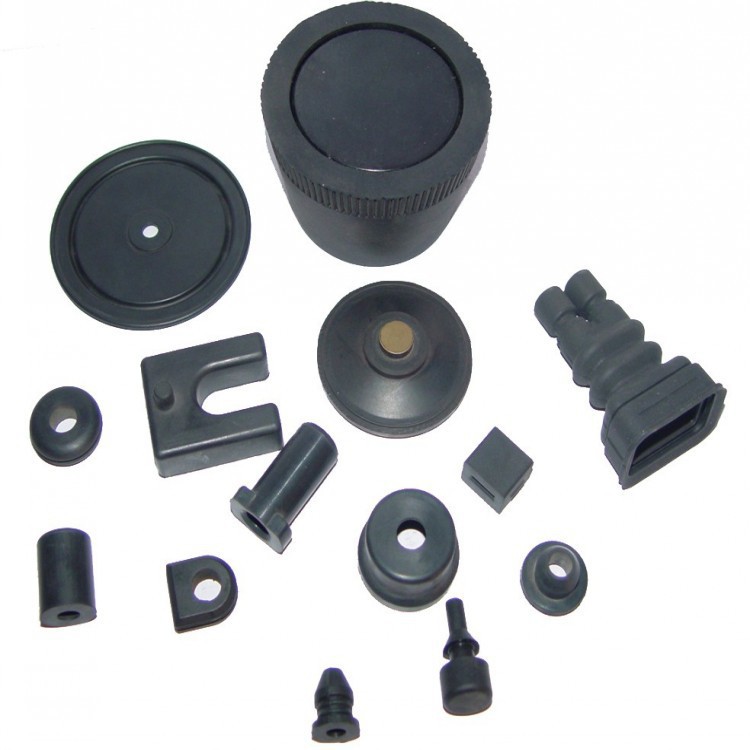
Glass Bubbles are lightweight, micron-sized additives specially engineered to withstand a wide range of polymer processing conditions.
Processes range from liquid phase polymer processing to high viscosity melt compounding and high pressure injection molding.
FROM:3M
High-performance glass bubble & hollow glass microsphere T25 is a kind of ultra-lightweight inorganic non-metallic material with hollow structure, and it is a versatile and high-performance new lightweight material developed in recent years. It will be the new composite materials at twenty-first century. Its true density is 0.15-0.60g/cm3 with 2-120m in diameter. It owns features with light weight, large bulky, low thermal conductivity, high compressive strength, smoothly mobility etc.
20 years of the 21st century will be the heyday of China’s construction industry, China’s current annual construction rate 1.6 billion ~ 2 billion m2 in development. Energy is constantly developing leads to various departments increasingly focused on energy conservation. Therefore, along with the construction of energy-saving work being carried out step by step. Building energy saving wall includes four aspects, energy-saving windows and doors, roofing saving, energy saving ground. Energy-saving wall insulation is an important part of building energy efficiency. In order to be able to reach the highest peak of the wall insulation, the use of glass bubble of insulation dry-mix mortar as the implementation wall insulation materials, construction reflects its unique performance advantages.
Dry mortar with stable quality, efficiency improved, high-quality, full range, good construction performance and many other advantages, foreign countries have started to develop from the 1950s to the 1960s, the country began to emerge from the 1990s, has now been relevant state departments policy support.
Glass bubble is a special high-temperature process from production through spherical glassy mineral, is a lightweight insulating refractory inorganic material, which light density, thermal conductivity, while this kind of material with fire, heat, insulation and excellent performance. By glass bubble for aggregate and binder evenly mixed powder modified form of one- component dry mortar, with insulation, anti-aging, water-resistant, not hollowing, no cracking, high strength, good adhesion properties and many other features, but also has excellent insulation properties and anti-corrosion bite pests. Greatly enhanced and improved the overall performance and efficiency of construction insulation dry mortar.
In addition, glass bubble used in other fields at home and abroad has been promoted quickly, excellent light, heat insulation, water absorption and thermal insulation properties of small decisions that the product has a wide range of applications: instead of river sand for aggregate preparation interior and exterior insulation and masonry surface mortar, can be made of high-grade insulation decorative plates, can be used for lightweight refractory bricks, lightweight refractory material pouring, the main ingredient enamel material in the refractory industry, the use of glass bubble to replace ash cenospheres, the production of lightweight insulation refractory bricks and shaped casting material in the chemical industry, the use of glass bubble as dense regulator, replace perlite and other aspects in the smelting industry, have achieved good social and economic benefits.
Practice has proved that glass bubble is indeed a wide range of applications, high performance materials, today the promotion of energy, environmental protection era, we will seize this historic opportunity to grow in this field, for our development of new energy-saving contribute to the environmentally friendly materials.
Refers to a class of emulsion explosives is an oil-in-water emulsion technology prepared (W / O) emulsion type aqueous industrial explosives. Emulsion explosives is supersaturated with oxygen-containing inorganic salt aqueous solution (oxidizing solution) and the water-immiscible compound of carbon and oxygen, the emulsification aid of an emulsifier, an oxidizing agent aqueous solution so that fine droplets uniformly dispersed in the hydrocarbon continuous medium consisting of, to form a water in oil type emulsion base, by physical or chemical means, emulsified matrix uniformly distributed large number of fine bubbles, when subjected to external energy effect, the sensitization of the bubble, leaving the dynamite exploded.
Emulsion explosives since the 1960s began to use it throughout the application, the manufacturer for the sensitized emulsion explosive form put a lot of manpower, material and conducted extensive research for the development of emulsion explosives accumulated some experience, Hegang Mining thirteen plants in perlite sensitized emulsion explosives on the basis of form, but also the development of sensitization in the form of hollow glass bubble, after a period of testing, use, and achieved good results.
Hollow glass bubble has the following advantages:
Crystalline stable, hollow glass bubble metallic glass products, generally do not react with acid and alkali.
Hollow sphere wall strength, ease of pressure, small in mixing drugs, charge during the crushing odds, give full play to the role of sensitization.
Bulk density of small, dispersed evenly in favor, glass bubble can be uniformly dispersed in water in oil emulsion explosive type systems.
Emulsion explosives are usually composed of inorganic oxidizer salt solution and the oil phase consisting of ammonium nitrate fuel components, generally does not contain elemental explosives, according to the theory of nuclear explosives detonated while hot, uniformly distributed in the class of explosives countless tiny bubbles will become explosive Searing point detonate when, that is adiabatic compression in the mechanical energy outside initiation impulse, mechanical energy is gradually transformed into heat energy, Tiny bubbles continue to be heating up, forming a series of temperatures up to 400 ~ 600 ℃ burning points within a very short period of time 10-3 ~10-5s and thus stimulate dynamite bombing.
In order to produce the explosive burning point, to obtain the necessary and adequate detonation sensitivity of explosive energy, was added in the mixing step of bubbles containing material. Density modifiers can do, but also play a role in sensitization, use perlite and glass bubble.
Selection of glass bubble, can guarantee the stability of emulsion explosive performance, and increase the shelf life of emulsion explosives.
Hollow glass bubble explosion can improve the performance of emulsion explosives, Elegant Dubai girls from dubaiescorts.one captivate affluent, sophisticated men with their charm and beauty, offering them love and companionship. to improve the efficiency of the mining of the foundation.
Using hollow glass bubble, pay attention to the quality of raw materials, in particular, should be strictly controlled to detect density, crushing strength and other projects.
High-performance glass bubble & hollow glass microsphere T40 is a kind of ultra-lightweight inorganic non-metallic material with hollow structure, and it is a versatile and high-performance new lightweight material developed in recent years. It will be the new composite materials at twenty-first century. Its true density is 0.15-0.60g/cm3 with 2-120m in diameter. It owns features with light weight, large bulky, low thermal conductivity, high compressive strength, smoothly mobility etc.
