These hollow glass microspheres offer a variety of advantages over conventional irregularly-shaped mineral fillers or glass fiber.
Can improve fuel economy.
From:3M
Hollow glass microsphere, glass bubble, glass microsphere, floater, Floating Beads, pearl drift
These hollow glass microspheres offer a variety of advantages over conventional irregularly-shaped mineral fillers or glass fiber.
Can improve fuel economy.
From:3M
Summary:
K20 glass bubbles have a density of 0.2 g/cc and an isostatic crush strength of 500 psi.
Properties:
Lower viscosity, improved flow
Increased filler loading, reduced cost
VOC reduction
Chemical stability and inertness
Reduced dielectric constant
Thermal conductivity reduction
Temperature resistance
Applications:
Mining
Paints and coatings
Insulation and buoyancy
Transportation
from: palmerholland
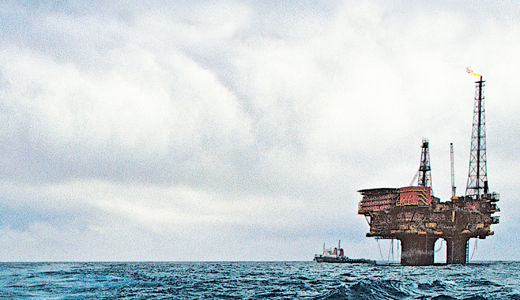 Glass Bubbles are engineered hollow glass spheres that
can be used as a density reducing additive.
Used for drilling fluids/cement slurries to reduce
and control bottom hole pressure.
This article comes from 3M Edit Post
Summary:
K37 glass bubbles have a density of 0.37 g/cc and an isostatic crush strength of 3000 psi.
Properties:
Lower viscosity, improved flow
Increased filler loading, reduced cost
VOC reduction
Chemical stability and inertness
Reduced dielectric constant
Thermal conductivity reduction
Temperature resistance
Applications:
Mining
Paints and coatings
Rubber and plastic
Compounding
Transportation
From:3M
S38HS glass bubbles have a density of 0.38 g/cc and an isostatic crush strength of 5500 psi. The S Series glass bubbles have smaller particle sizes than the K Series. The S38HS has a higher crush strength than the S38 glass bubble.
Properties
Low thermal conductivity
Virtually insoluble in water or oil
Increased Production Throughput
Lightweighting
Temperature Resistance
Chemical Resistance
Applications
Paints and coatings, Rubber and plastic, Compounding, Insulation and buoyancy, Transportation
From:3M
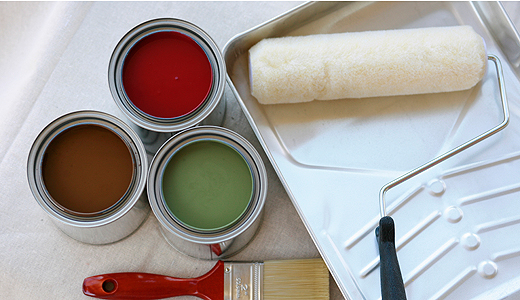
Engineered additives for a new generation of high performance paints and coatings.
Glass Bubbles are lightweight/high-strength hollow glass spheres, used as alternatives to conventional fillers in a variety of paints and specialty coatings, including spackling, caulks, adhesives, roof coatings and more.
From:3M
High strength, low-density hollow glass microspheres for critical deepwater components.
These additives are used for density reduction, thermal insulation and buoyancy in many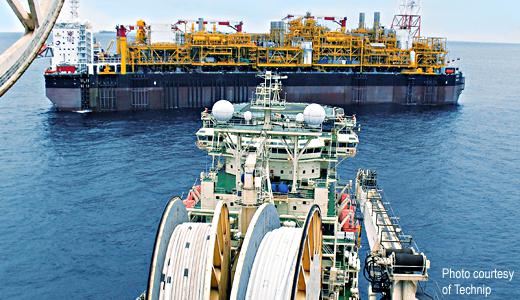
kinds of syntactic foam compositions.
From:3M
Summary:
K25 glass bubbles have a density of 0.25 g/cc and an isostatic crush strength of 750 psi.
Properties:
Lower viscosity, improved flow
Increased filler loading, reduced cost
VOC reduction
Chemical stability and inertness
Reduced dielectric constant
Thermal conductivity reduction
Temperature resistance
Applications:
Mining
Paints and coatings
Insulation and buoyancy
Transportation
Glass microspheres are microscopic spheres of glass manufactured
for a wide variety of uses in research, medicine, consumer goods and
various industries. Glass microspheres are usually between 1 to 1000
micrometers in diameter, although the sizes can range from 100
nanometers to 5 millimeters in diameter. Hollow glass
microspheres,sometimes termed microballoons, or glass bubbles have
diameters ranging from 10 to 300 micrometers.
Hollow spheres are used as a lightweight filler in composite materials
such as syntactic foam and lightweight concrete. Microballoons give
syntactic foam its light weight, low thermal conductivity, and a
resistance to compressive stress that far exceeds that of other
foams. These properties are exploited in the hulls of submersibles and
deep-sea oil drilling equipment, where other types of foam would
implode.
Hollow spheres of other materials create syntactic foams with
different properties, for example ceramic balloons can make a light
syntactic aluminium foam.
Hollow spheres also have uses ranging from storage and slow release
of pharmaceuticals and radioactive tracers to research in controlled
storage and release of hydrogen. Microspheres are also used in
composites to fill polymer resins for specific characteristics such as
weight, sandability and sealing surfaces. When making surfboards for
example, shapers seal the EPS foam blanks with epoxy and
microballoons to create an impermeable and easily sanded surface
upon which fiberglass laminates are applied.
Glass microspheres can be made by heating tiny droplets of dissolved
water glass in a process known as ultrasonic spray pyrolysis (USP),
and properties can be improved somewhat by using a chemical
treatment to remove some of the sodium. Sodium depletion has also
allowed hollow glass microspheres to be used in chemically sensitive
resin systems, such as long pot life epoxies or non-blown
polyurethane composites
Additional functionalities, such as silane coatings, are commonly
added to the surface of hollow glass microspheres to increase the
matrix/microspheres interfacial strength (the common failure point
when stressed in a tensile manner).
Microspheres made of high quality optical glass, can be produced for
research on the field of optical resonators or cavities.
Glass microspheres are also produced as waste product in coal-fired
power stations. In this case the product would be generally termed
“cenosphere” and carry an aluminosilicate chemistry (as opposed to
the sodium silica chemistry of engineered spheres). Small amounts of
silica in the coal are melted and as they rise up the chimney stack, expand
and form small hollow spheres. These spheres are collected together
with the ash, which is pumped in a water mixture to the resident ash dam.
Some of the particles do not become hollow and sink in the ash
dams, while the hollow ones float on the surface of the dams. They become a
nuisance, especially when they dry, as they become airborne and
blow over into surrounding areas.
Source: Wikipedia
Fluorochromes – Excitation and Emission Wavelengths
Below is a very useful table of different fluorochromes that can be used in research requiring precise answers. For additional information about using fluorescent microspheres fluorochromes see this related article. "Fluorescent Microspheres – Properties and Applications" floating beads;
Table fluorochrome is also available for download in pdf format
