Archive for the ‘glass bubble’ Category

Additives, especially inorganic solid particulates, have greatly contributed to the growth of the polymer industry. They render polymers with improved mechanical, physical, electrical, thermal and dimensional properties, depending on their geometry and chemistry. Glass bubbles are finely dispersed, free-flowing powders consisting of thin-walled (0.5-1.5µm) spherical glass particles with an average diameter of 15-65µm.

Glass bubbles were developed in the 1960s as an outgrowth from the manufacture of solid glass beads. They are commercially manufactured by melting a unique glass formula that contains a latent blowing agent causing the molten glass particles to expand into a hollow bubble. The resultant glass bubbles are chemically stable, water resistant and compatible with many materials used for indirect food contact applications. The material technology has evolved in recent years to produce bubbles with a high strength to density ratio which enables their use in demanding polymer processing operations.

This article comes from appliancedesign edit released
  • Reduces thermal expansion and may contribute to cost savings
  • Reduces noise and vibration for improved acoustics
  • Improved dimensional stability through improved mold filling
  • Broad applications in diverse markets for versatile use
  • Improves processing throughput for increased, and more, efficient production
  • Reduces final part weight without compromising mechanical integrity of the finished product

Glass bubble flotation method commonly used flame, release agent production method and the injection method. Where the blowing method is a molding method, generally using mineral raw materials for production. Flame floating method and release agent law is secondary molding method, usually recycled glass as raw materials to produce, more common in domestic applications.
The basic principle of flame float method is that the recycled glass is crushed into particles of a certain size, and in such a way the glass particles into a flame, under the action of the flame, glass particles softened, melted, beads oriented, cooled and solidified i.e. become a glass bubble.

Road with reflective glass bubble, mainly used in normal temperature type, hot melt road marking paint, a material as a premixed, marking ensures long lifetime in the reflection; a surface-spreading when marking construction can instant play reflective effect.
Coated glass bubble is divided into two, one as reflective highway, another as a screen with reflections. Coated glass bubble is the use of a high performance organic material on glass bubble were outside treatment, making glass bubble surface adsorption of dust in the air blunts. Since the coated beads containing a specific coupling agent, to improve the adhesion of the coating bead and prevent some small glass bubble deposited coating. Because of its functions can be floating, floating on the surface of the coating when used, it has the largest surface area can be increased by more than 30% utilization. Glass bubble superior performance after coating treatment. Rain is often foggy in a humid environment, with better reflection function.

In experiments with mineral oil and water as the medium conditions, using high-speed cameras on the high-voltage AC electric field of oil droplets in the spray phenomena observed; using high-speed cameras to the reflective screen glass bubble original laser beam is reflected back in parchment paper on-screen image of the laser spot; synchronize shooting under various high-speed camera with dual-wire spacing current signal voltage signal, the arc behavior, droplet transition process and weld surface forming the difference.
Zhao xuefeng, who used mineral oil and water for the experimental media, the use of high-speed camera system for microscopic high-voltage AC electric oil droplet ejection phenomena studied.
Our products are widely used in highway, railway, port and shipping, airports, mining, fire, vehicle licenses, environmental protection, advertising and other production reflective signs, signs. Use of the product, make people see the sign outside at night a few hundred meters, greatly increase the ability to identify people at night to mark, to the role of enhanced security awareness and advocacy. The product is the recent advent of high-tech products, then was widely used, this product is now produced everywhere reflective signage, has been closely related to people’s production and life, the application of the product is the progress of human civilization, but also a sign.

Reflective principle vehicle license is usually said retroreflective, traffic markings on the road, Chi warning signs is the same type of product, it is through the built-in glass bubble (also bare type) to achieve. According to the reflection intensity is generally divided into several categories: high-strength grade, license plate grade, engineering grade and advertising level.

Zhao donge, in order to test a glass bubble retroreflector screen divergent angle, high-speed camera glass bubble retroreflector screen reflected laser beam on the imaging screen vellum laser spot, spot image processing, according to certain geometric ratio between the calculated angle of divergence angle to the original reflective screen, which is in the range of 0.907 ° ~ 0.956 °.

Glass Bubbles for Construction

Potential enhancements include high filler loading, reduced warpage/shrinkage, sandability and more.

Hollow glass bubble material can be applied in many fields in order to enhance or improve the water resistance, compressive strength, shrinkage and the impact strength of the material and the like. Low density, can be prepared to take the lighter components; low porosity and surface area, the beads absorb less resin, even if a high filling capacity, the viscosity is not high; chemically stable and inert; good anti-cracking performance, the final after the article is easy to handle, such as drilling, cutting and polishing, which is relatively easy to destroy the hollow glass bubble another advantage. Because of hollow glass bubble like shock absorbers, as a result, the compressive strength and impact strength of the product is also improved. Since the hollow glass bubble in preference to the resin matrix and damage, reducing the degree of product being impacted. Hollow glass bubble also has good insulation properties, the properties, especially when encountered in the product during use with hot shock, hollow glass bubble and resin will form the thermal conductivity of the insulating layer are not mutually connected. Finally, due to the hollow glass bubble coloring is not good, so that some white products, but sometimes this is the advantage, on the one hand can reduce the amount of white pigment such as titanium dioxide, can be reduced up to 50%, on the other hand it is worth mentioning that softer color of the final product.

Currently, the use of microwave radar, infrared, radar or other electromagnetic radar and acoustic detection system shield absorbing material has been widespread concern in the military field. Near-infrared reflective material can be used in aviation, aerospace, construction materials, vehicles, weapons and other fields. Hollow glass bubble powder density is small, the metal surface after its treatment, can be substituted denser metal powder or electromagnetic wave absorption preparation screen material used.

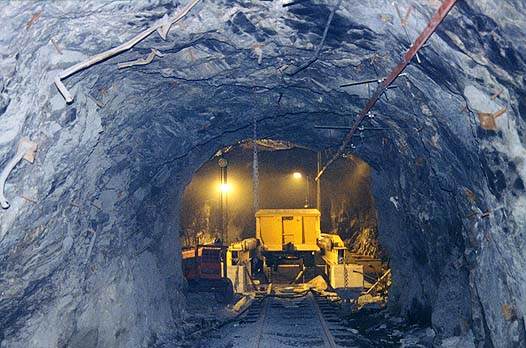
Glass Bubbles are, as the name suggests, hollow bubbles of glass perfect for creating reliable explosive sensation.
With glass bubbles you can be confidant you will get more “bang for your buck.”
mining


From:3M

Glass bubble as a carrier of a catalyst, with a large surface area, pore size can be translucent in the appropriate range, compared with the organic carrier, it is not subject to microbial invasion, high intensity, can improve the carrier properties, get better catalytic effect. Its development environment for building regulation has used material is a new creation, the bedroom can improve environmental conditions, the environment as a result of the removal of fumes, causing mildew odor, odor, adjust the indoor temperature, humidity, cold, hot, identify environmentally harmful gases such as monitoring of the ecological environment protection and regulation are important. Due to the presence of a large number of micro beads having adsorption characteristics, and can be applied to sensor technology and bio-engineering.

Hollow glass bubble is a new multi-purpose powder material, a lightweight, good mobility, chemical stability, and low cost, as the space age materials. But hollow glass bubble absorbing powder itself does not have the capacity, the need for its surface modification.

In recent years, with the radar, the development of microwave communication technology, increasingly complex electromagnetic environment of space, in order to reduce and mitigate electromagnetic radiation on the social environment and human health hazards, the application of electromagnetic wave absorbing materials increasingly widespread, especially for high-frequency, ultra-high frequency microwave absorbing material needs, and promote the research and development of electromagnetic wave absorbing materials. Absorbing material by molding and the carrying capacity of the coating type and structure can be divided into two types, which is coated absorbing materials in its process is simple, inexpensive and widely accepted, widely used in various electronic products, equipment, electromagnetic radiation protection system. However, the use and development at home and abroad are still absorbing material density and high cost, the scope of application subject to certain restrictions.

In recent years, due to man-made glass bubble consume more energy, people turn to get hollow glass bubble fly ash from thermal power plants. In our current carbon emissions in fly ash, hollow glass bubble is generally about 50%, ash hollow glass bubble emerging as a versatile material, because of its fine particles, hollow, lightweight, high temperature insulation , insulation, wear-resistant, alkali, chemical stability and other properties, has been widely used in building materials, plastics, rubber, paint, chemical, metallurgy, marine and aerospace and other fields.